
THE ENAMEL CRAFT
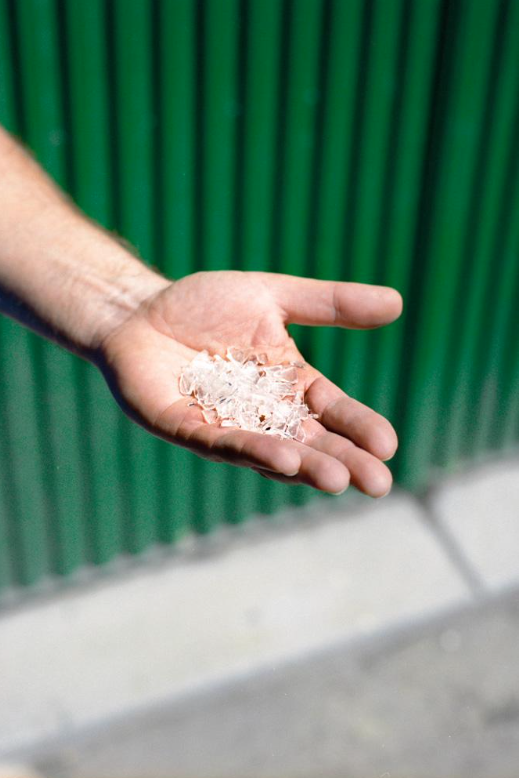
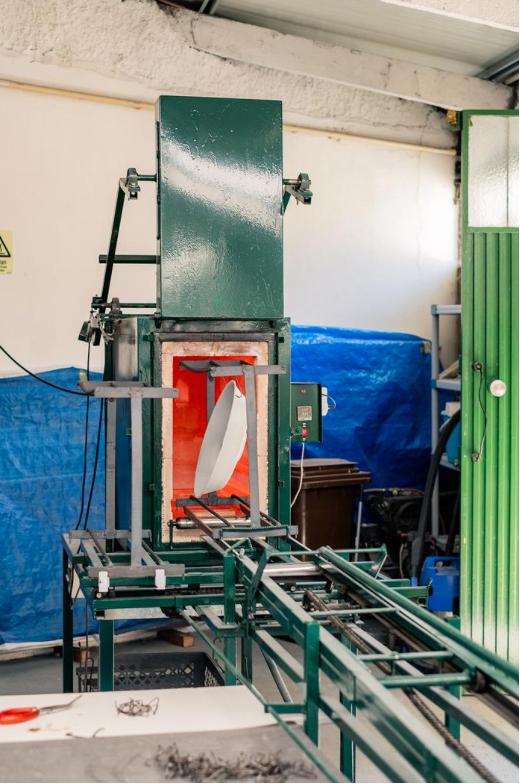
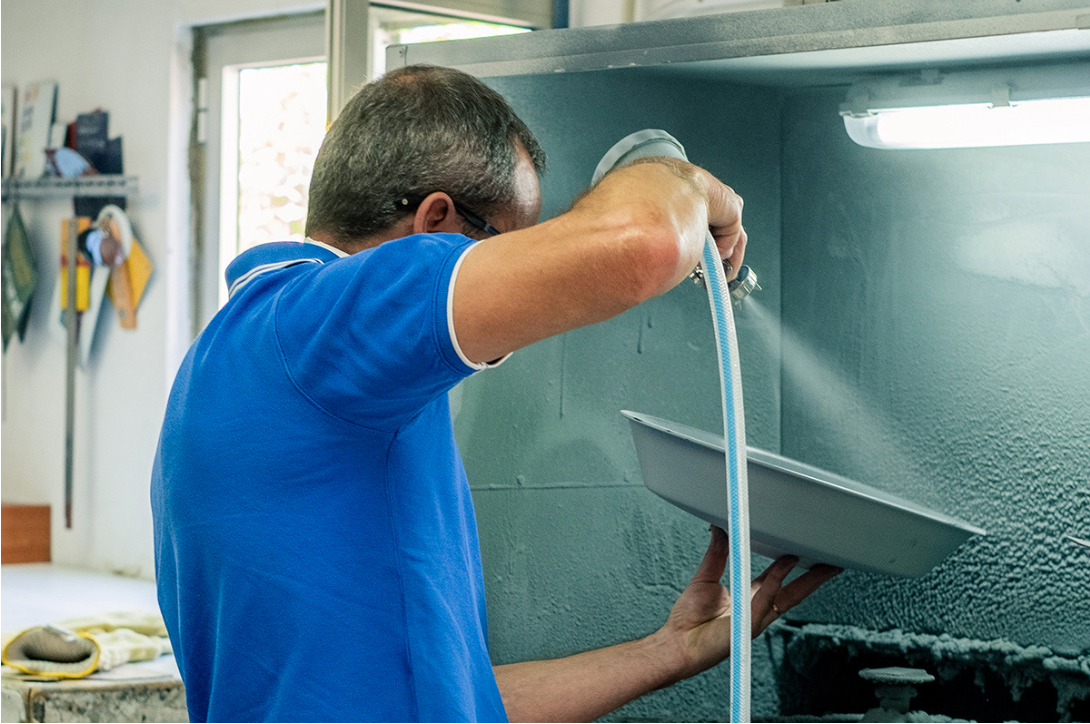
On one of the many visits I made to this enameling workshop, I spoke with Luís Tato, heir to his family business, which started with his father in the late 1990s. When most enameling factories were shutting down, they decided to open their workshop and pursue a niche market looking for specific and customized items.
WHEN DID THE COMPANY BEGIN?
It began in the late 1980s. Our "dream" was born around the 1990s. It was still a bit of an embryo. In 1990-1991 we were looking at what could be a good idea on which we had some exclusivity until we finally got it. The enameling factories in Porto and the rest of the country were all shutting down at that time.
WERE THERE STILL SOME FACTORIES [operating]?
Yes, more in the North of Portugal. We still met some factories working.
WHAT KIND OF PRODUCTS DID THEY MANUFACTURE?
These factories made kitchen utensils, bathtubs, traffic signs, door numbers, street signs, etc. All the items that relate to the enamel range. All kinds of kitchen utensils, etc. However, these factories began to close up so we noticed that there was a market gap there that we could use. It turns out that, as I've told you, they called us crazy because we were opening up when all the others were closing. We thought that [at least] one company should remain in this area.
DID YOU ALREADY HAVE KNOW-HOW IN THIS AREA?
My father had practically all the know-how. He was in charge of some enameling factories and had a lot of experience. I just learned what he taught me, and then I tried to value the craft of enamel. This craft is further appreciated, fortunately, also thanks to the existence of our company. Then, we started to explore the area beginning by making very artisanal work, that is, very rough work, with no computers, no internet — there was no internet [at the time] — nothing, that is, we used templates, cardboard or aluminum templates... making the numbers with aluminum, cardboard, plastic templates… it was a very rudimentary process. And then, little by little, we started trying to improve the quality. As time went by, we began investing a bit more in information technology, drawing software... Then the internet appeared, which was of great help because, before that, our database was the Yellow Pages (laughs). I even had the Yellow Pages from the north to south of Portugal, which we used as our index. I mean, we went to the index and read: hardware shops, stamp shops, junk shops, pet shops, these were our first customers. Our very first customers came mostly from the Lisbon area. Despite most of the factories being in the north of Portugal, Lisbon consumed the most enamel items. We started by doing some samples and the reaction from the public was very good: customers loved to know that there was a company in the north that was going to start this activity. So customers started asking us for different things, door numbers were the basic, was our number one product. Then there were the "dog" signs and "there's the cat" signs (laughs).
THE BEST-SELLERS!
Exactly. And of course, we had never done any of this before, customers started sending us old samples and from these old samples, we made replicas. And that's it, we started to increase our production capacity in terms of being able to make other models, etc. And, over that time, we were gradually evolving, evolving… until the computer age entered, which made it much easier, although there is a lot of work here that has to be handcrafted. It had to be a traditional craft, handmade, because information technology doesn't do everything, thankfully. So a lot of things have to be handmade. So we started to make everything based on plates and signs, which is our number one product. And after stabilizing this product, others began to come up like the lampshades and the customized enamel crockery. And we also produce our own enameled crockery. We can also restore other pieces: backgrounds for antique wall clocks, which is a popular item because there aren't many options for this piece, and little by little we improved our offer. Fortunately, we have now reached a considerable status with quality and international recognition. We work with many countries: the Scandinavian countries, Australia, the United States, and Europe. But more and more for the United States and more and more for Spain, for example. Everything, everything is made to order and customized. Yesterday, for example, I had some customers here who wanted to purchase some lampshades to put on top of a pool table, which is a piece that includes three of these plate lampshades plus a structure about four feet long, more or less... Well, it worked fine. I mean, these are the kind of things that you simply don't see on the market...
CERTAINLY YOU WERE LEARNING SOMETHING.
… and that we try to make custom pieces, exactly what the customer wants. And so, currently, we are the only workshop in both Portugal and Spain to do this type of work and our goal is to try more and more to improve the quality and have new products. One thing that excites me is the old enameled items. If I can make a replica of an old piece, I'll do it. At this moment we are restoring some, it is the case of antique bidés, jars, pots, etc. We restore some of these kinds of pieces to maintain that tradition, those antique designs, so the craft won't vanish. Our number one items are the enamel signs, but we like to follow along with the making of other items, and that's great. So, this is a small family company and I'm the second generation [laughs].
YOU'RE STILL IN THE BEGINNING...
Yes, and I owe it all to my father because without him there would be no company. He taught me everything I know, he had all the know-how and I just learned and treasured his teachings. And it was great, I owe it all to him, I took the most of that learning that I could, while he was alive. I tried to value all he knew and that one day I would miss, that I do know... So, what I've learned I've learned, and what I haven't I just won't have the opportunity again. I also have a great team working with me. They're very professional, they like what they do and they support me a lot. Because it's not easy to find people to work int his area. There's no professional training in enamel craft, no university studies, nothing... the only professional training is here. So, I have to train a worker from scratch, but, after a year or so, he/she'll be able to make a lot of tasks. At the moment we have a worker that's working here for a year now, and he's working very well. But you need to enjoy the work, of course. If you don't enjoy it, it won't work.