
the special brush
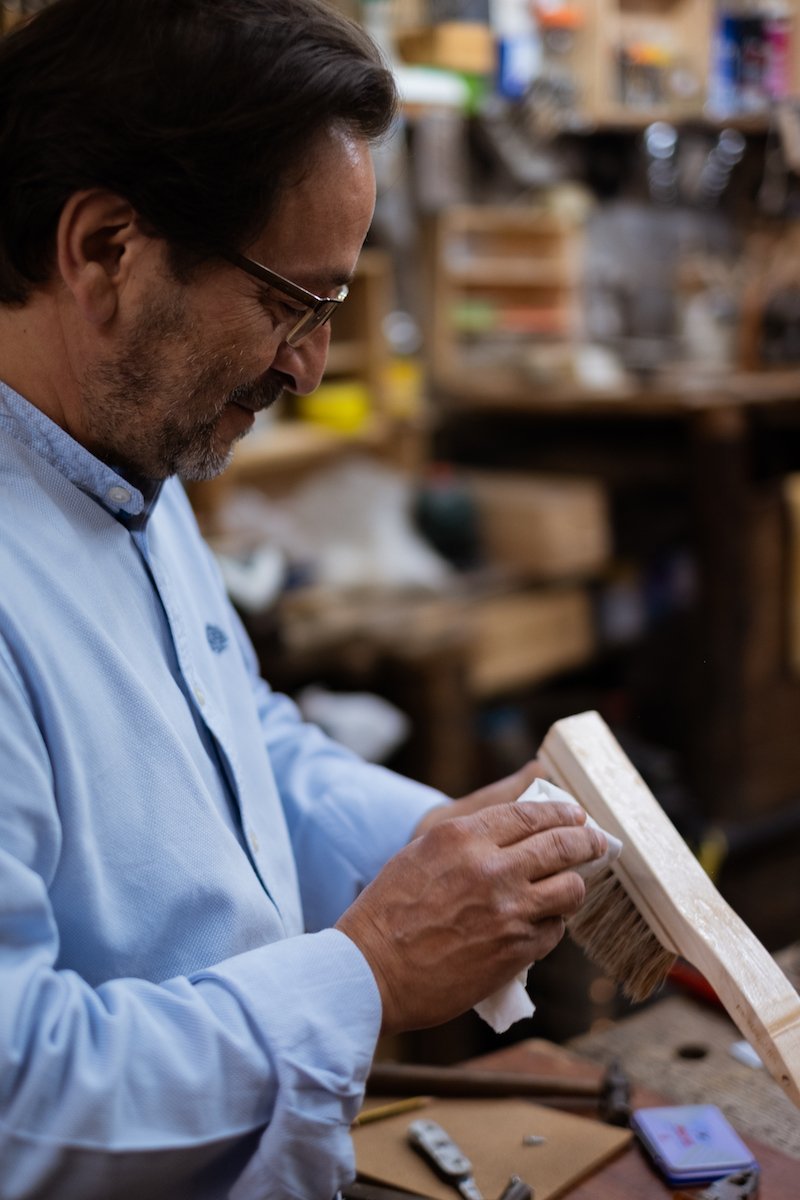
the final details on the brush
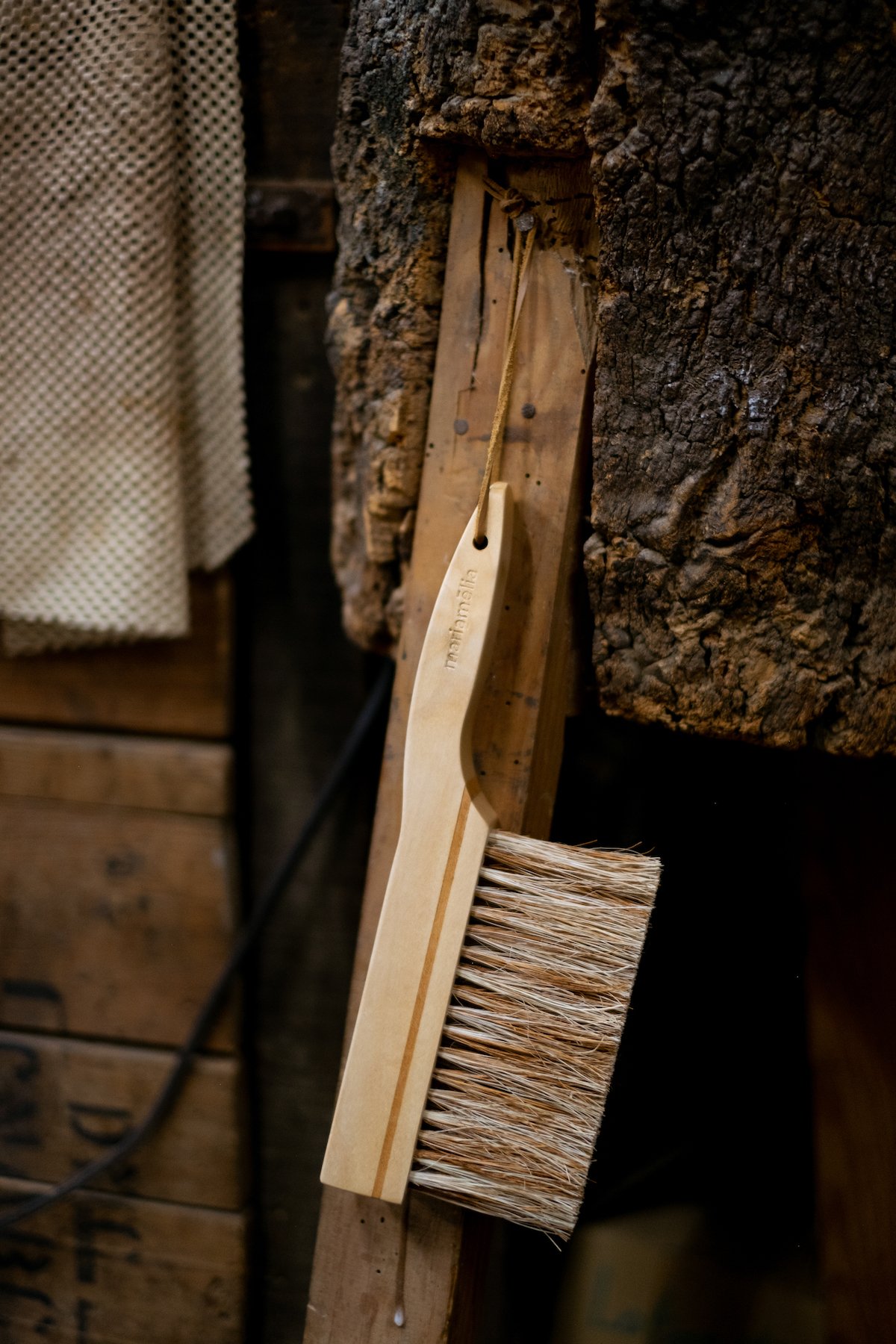
a unique brush
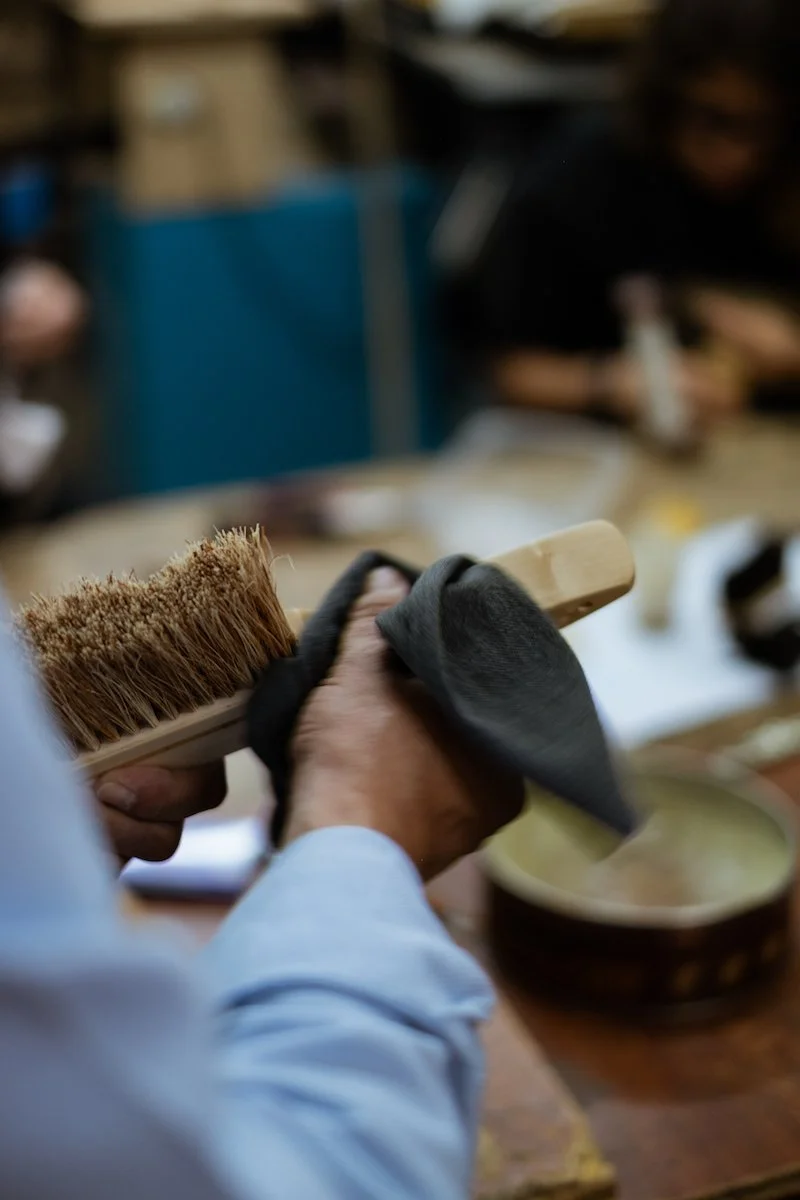
polishing the wood finish
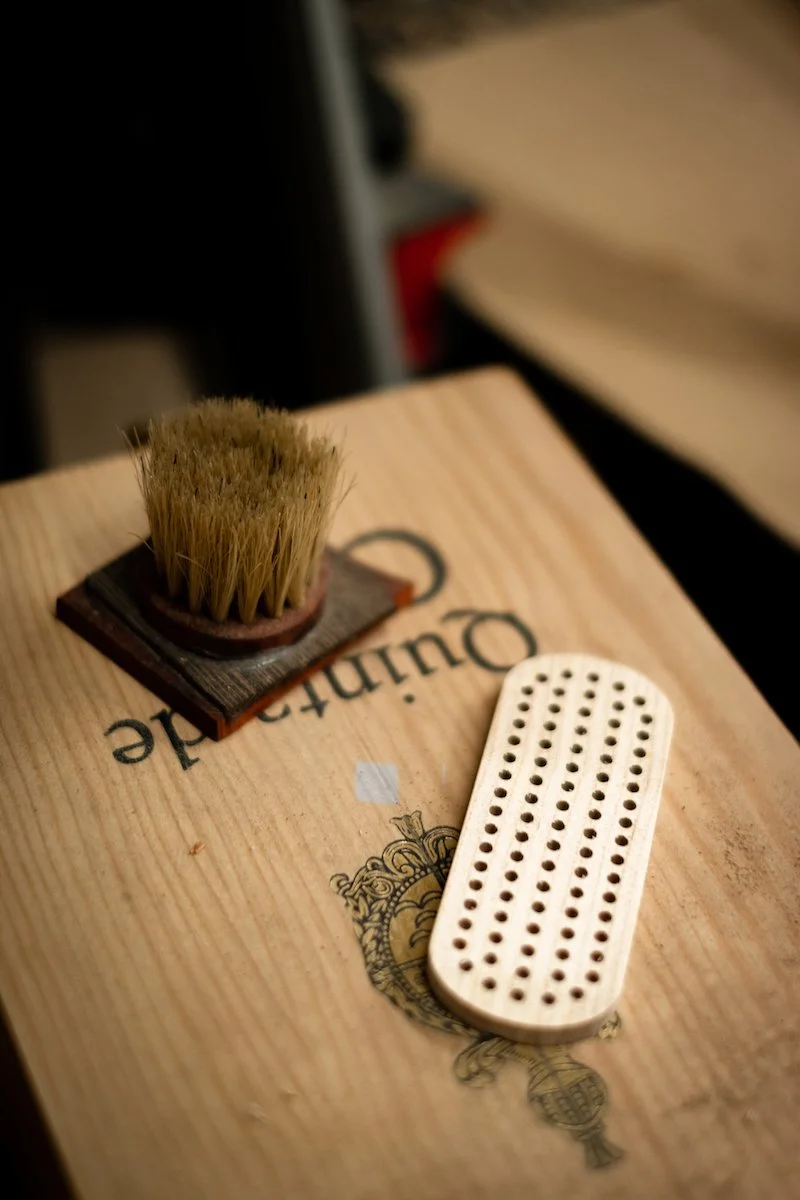
brushes in the manufacturing process
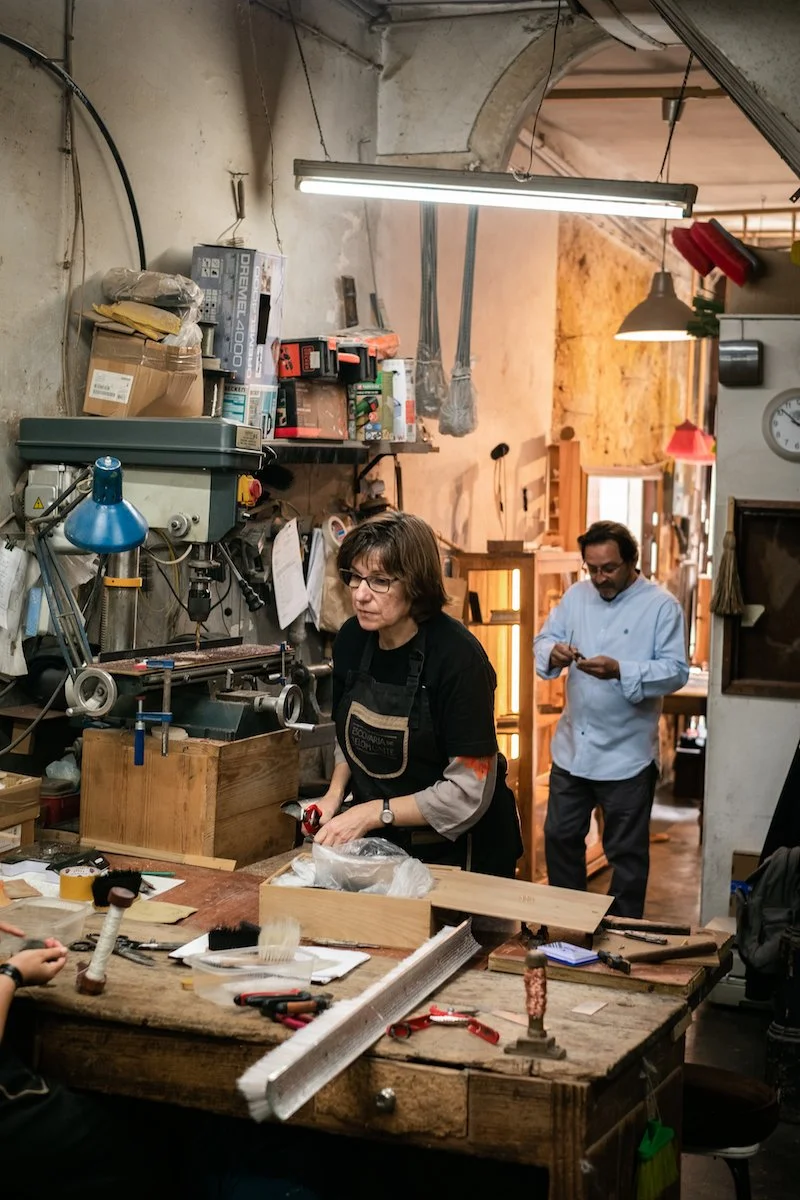
a true workshop
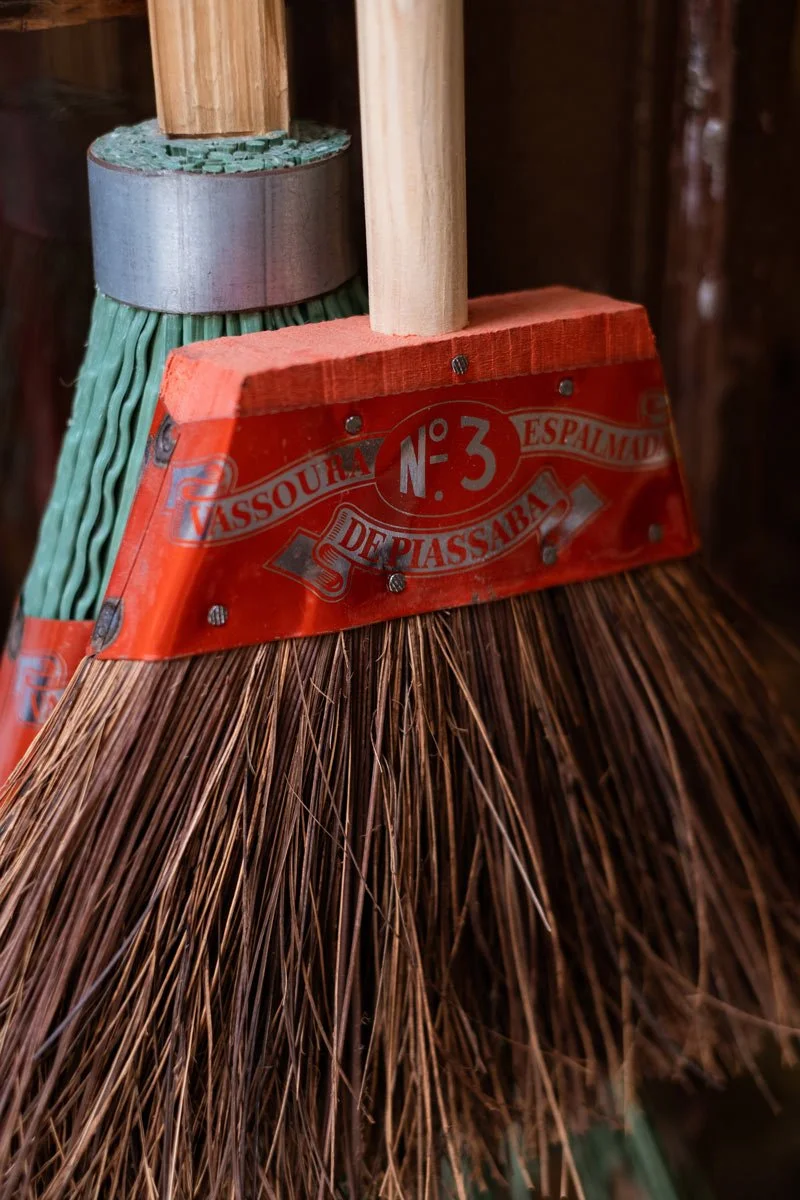
piassaba (fiber) brooms
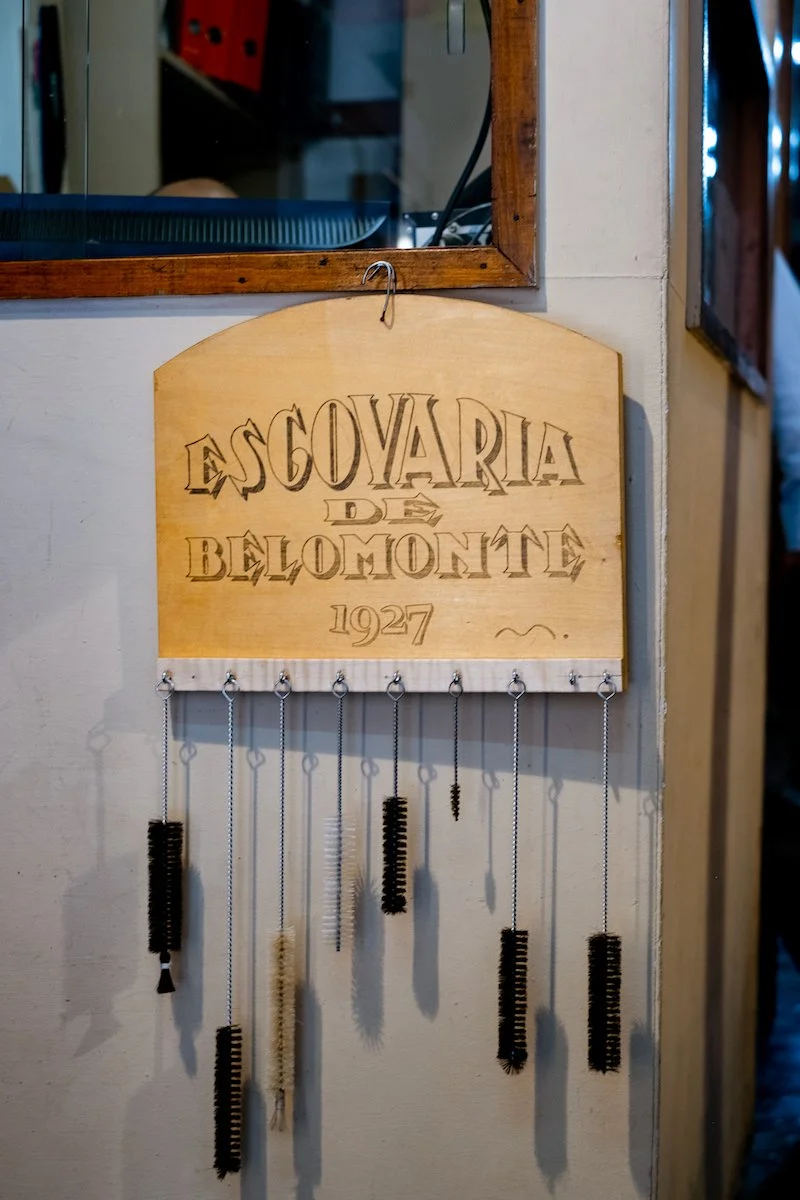
a set of brushes on display
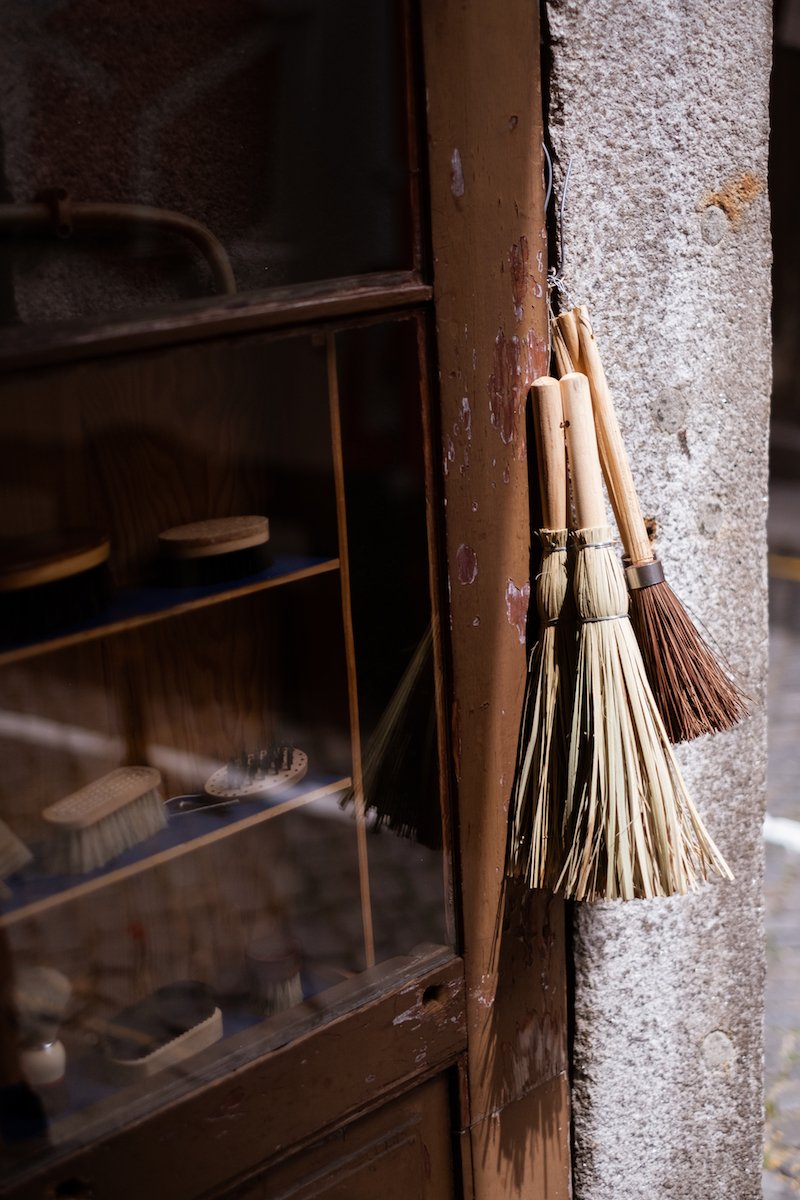
handbrooms made of palm and piassaba fiber
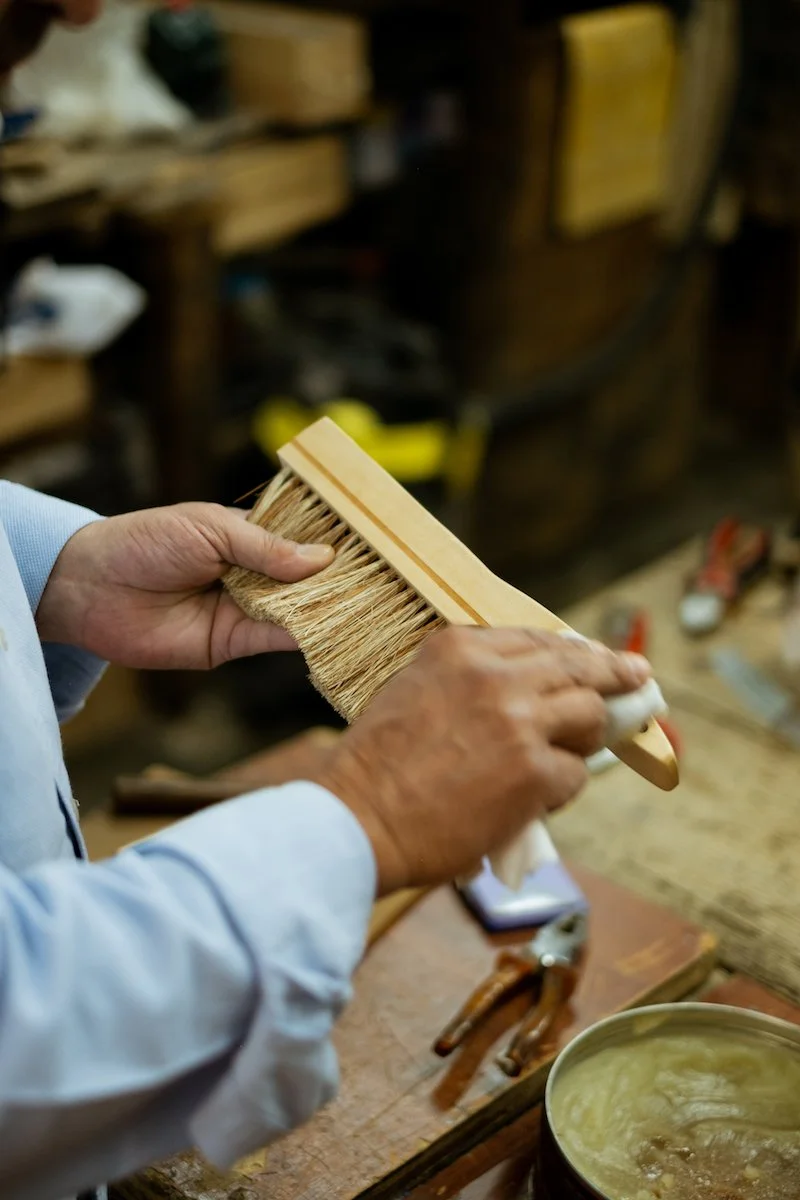
apply wax to the wood
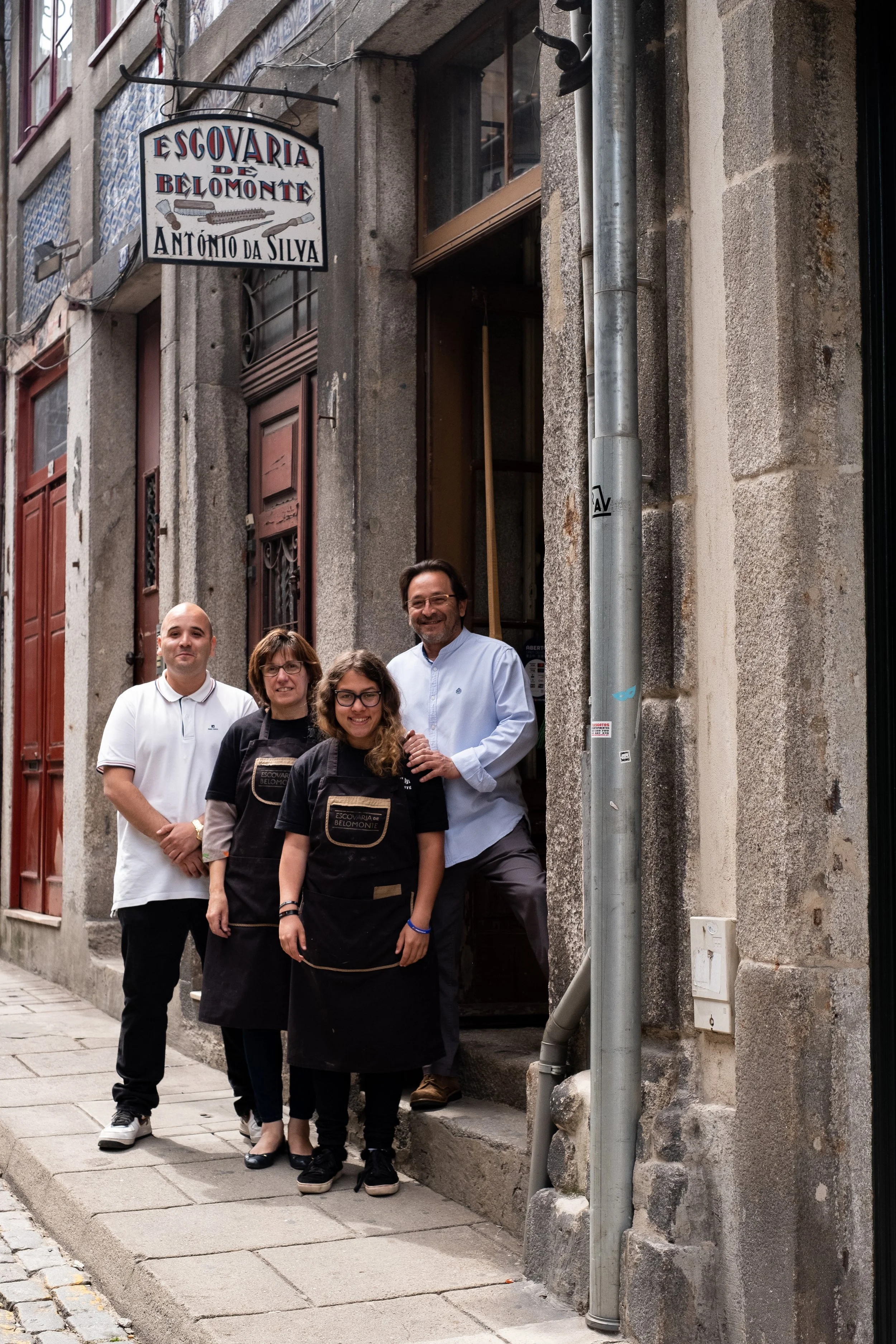
the team outside Escovaria de Belmonte
Fotos da Matilde Viegas (direitos reservados)
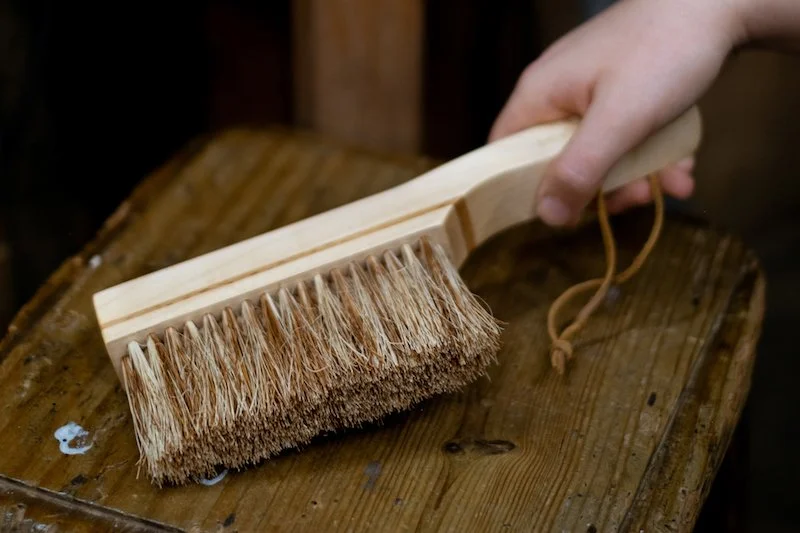
A conversation I had with the head of Escovaria de Belomonte, Rui Rodrigues, who keeps the last shop dedicated solely to artisanal brushes and brooms in town, working still within the family, and is now in the third generation. We talked a lot about the value of handcrafted products, how these pieces can be objects of worship or even luxury, and the drive for making well-made objects.
[TALKING ABOUT THE RECENT HISTORY OF THE WORKSHOP, THAT BEGINS IN 2007...]
The workshop was about to close down: the owners wanted to give this to Fátima because she was the only one who knew about brush making, but she said that “if I'm here making brushes, I'm not going to be out there selling, so who's coming here to buy them?". That's why Fátima declined the offer. I worked with interior decoration, I've always worked with wood and cork and I really enjoyed those things, and so I proposed to my wife that we kept the shop withinh the family. The owners, instead of closing this, passed the deal on to us. Then I went to serch for what was there from the "old days". It is very sparse in written history and drawings, there wasn't much, but what we found out made it possible for us to imagine this "story". So we started to invest in personal brushes and household brushes but with an added value: fine artisanal brushes, [handmade] with wood.
— YOU BEGAN SHIFTING TOWARDS A QUALITY APPROACH.
Exactly. Therefore, to make it with the best quality and with natural bristles. Before, the brush makers were only using nylon bristles because the natural bristles were of no interest for the industry. Although we now work with natural hair for the industry, mixed [with synthetic hair] because we think it works better, so much so that customers ask for it: "This is what I want". So I took this idea, I made some things differently, and things just worked out, and now they have been growing, little by little. And then people started to get interested in this [kind of product]: “Look how cute, making it by hand…” and the word of mouth and the quality started to bring us more clients. Nowadays not only do we have the industry (which is something that still keeps us going), and we have more industry, which looks for handmade because it is more resistant and it lasts longer. And we also have personal and household brushes, which are also starting to sell a lot more. Although I usually say that our household and personal brushes are priceless, they have a value: the value that you give them. Because in reality, it reaches a certain point that's not the price that matters [for the client], but it's the quality of the product and the guarantee that we provide for its usability.
— and that lasts for a lifetime…
… And it lasts for a lifetime. You can buy it now and it will last for your children, and then for your children's children. The other day we repaired a brush that was about 80 years old, and the owner was really happy about it! We have a brush over there that "worked" for 40 years in the hands of a shoeshiner: it is practically new. It has the wear and tear of time: from the daily handling the wood bent a little, but it's still functional, it can still be used [to shine shoes] today.
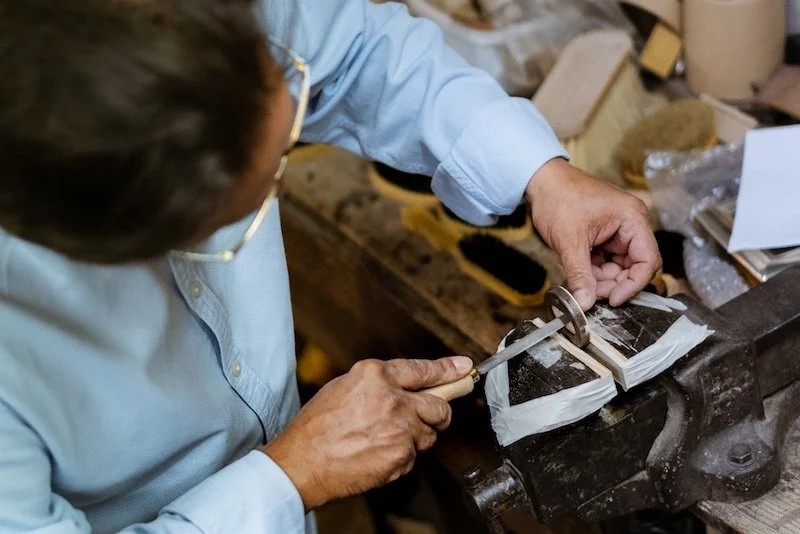
— IT STILL LASTS FOR ANOTHER 100 YEARS
Exactly. That's why we took this type of [skillfull] work and started to give it a different look. Meanwhile, about two years ago my son started to work with us, so I am the third generation if you can say that (it would be my wife but it's me) and my son, therefore, the fourth generation. And he also gave his contribution by shaking things a bit. He's already at a different level than he was two years ago. He managed to make the business grow a little more about a year ago, I have to give it to him, although it costs me nothing to admit it. It's always the case with [family businesses]: either one improves it or the other brings it down, that's the way it is.
— but there is a need for change…
Yes, there is. Change is always difficult, but because I'm older and I know the market, I never leave him to make this change on his own: “Yeah, you can do it”, on the contrary: I'm always putting some stops on him. Although sometimes he was right, I'd never give it to him right away, so he can realize that things are not as we want. So I would interfere in his way. But then there was a time when I had to start working alongside him, and it has been working out fine. Now the two of us are on equal ground, we divide the management between the two. This is his future, I hope... at least that's what we're planning for. His future must have to be much better than when I was his age. (…) I've already managed, after Sr. Fernando [the previous owner], to improve the business a little bit, and now with Sérgio running things, I'm sure that his horizons are quite different. So, this is how we are managing at the moment at Escovaria de Belomonte.
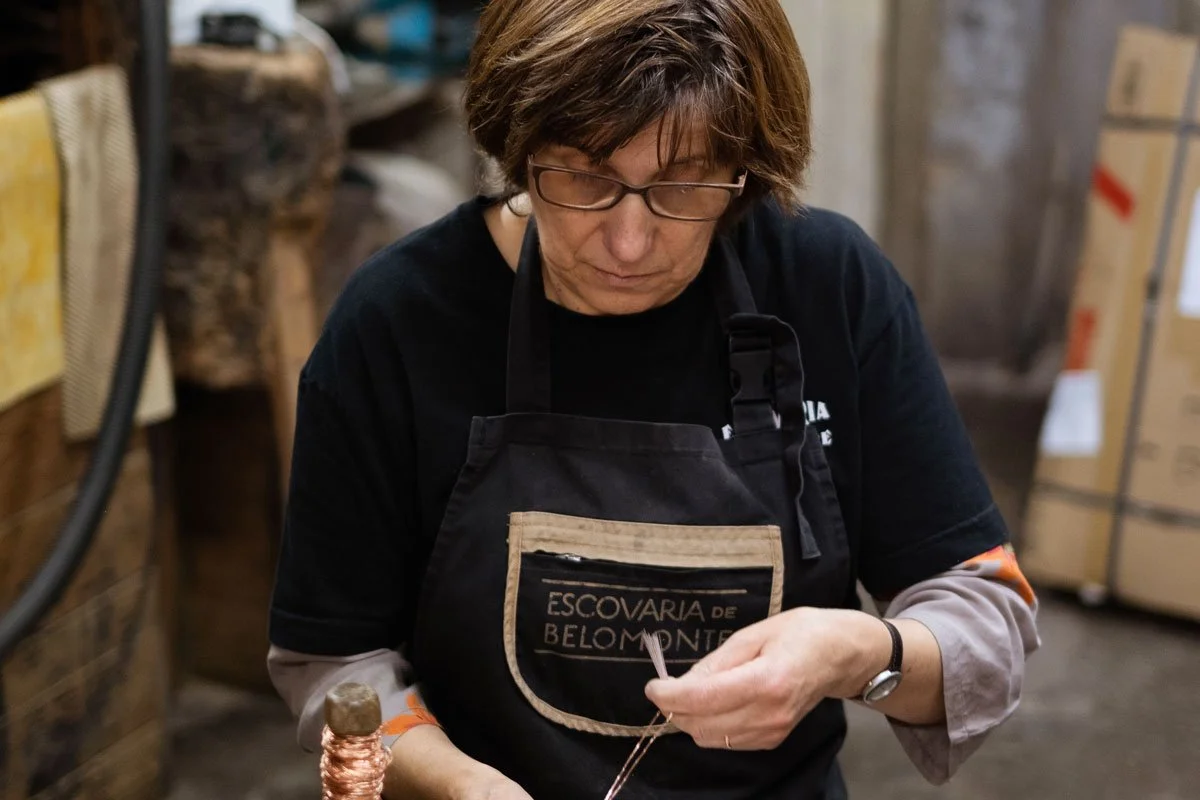
Fátima — the brush-maker master
— you were saying that a considerable portion of your clients still come from the industrial sector.
Yes, it's still what sustains this business; at this moment, it's still the industry.
— Is it mainly the textile industry, or is it already a mix of several industries?
It's a mix: textile, footwear not so much because it's still very difficult... but we do that too. Textile industry, cheese industry, chocolate... that's basically it. This one here is for the stationery industry.
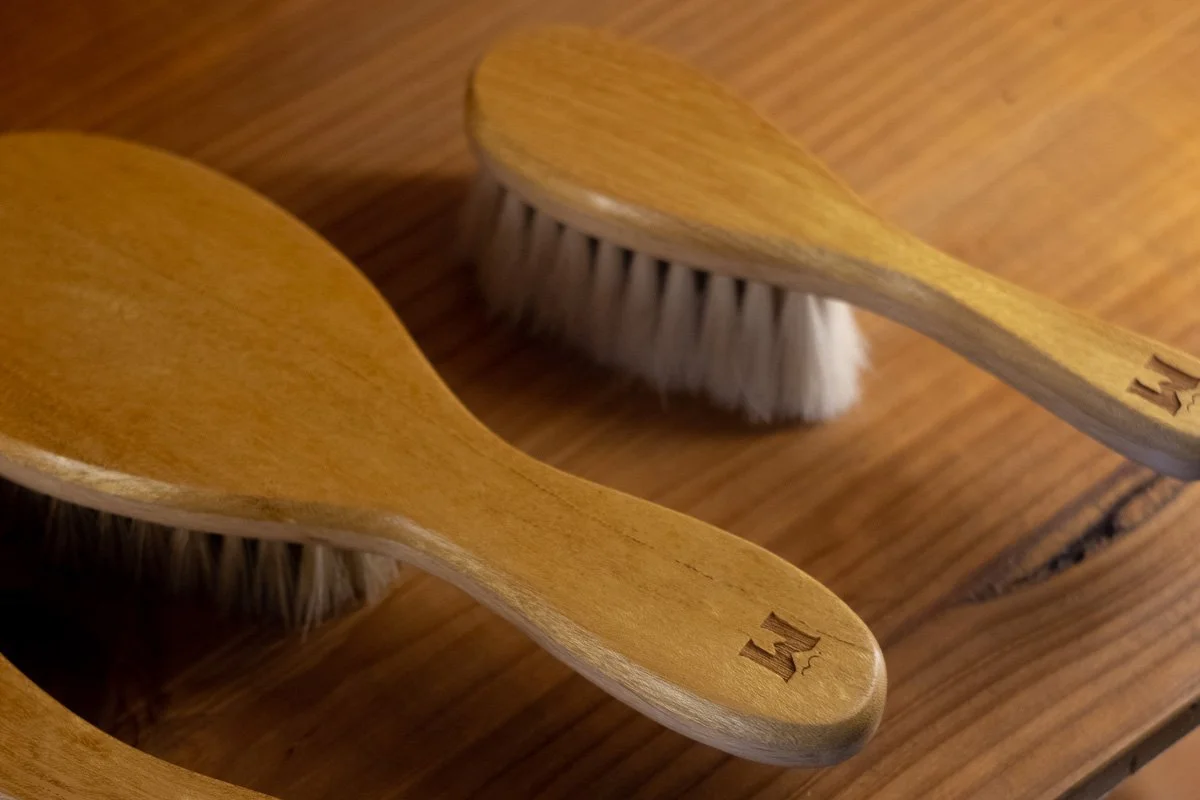
customized personal brushes
— So the other portion it’s the end customers?
Exatamente, que compram ou porque gostam ou porque… Isto é assim, a menina para comprar uma escova pessoal ou uma escova de calçado pode gastar 100 euros, até pode gastar mais, neste momento pode gastar até 104 euros [a escova mais cara], mas pode gastar muito mais… Mas imagine uma escova para calçado: quem gasta 100 euros numa escova não vai levar só uma, porquê, porque o calçado não se contenta só com uma escova. O calçado tem uma escova para puxar a cera, outra para puxar brilho, e outra para limpar diariamente. E quem compra uma escova dessas é alguém que tem uma calçado que não é igual ao meu e que custa, sei lá…
… várias vezes essa escova, não é?
Exatamente.
Exactly, people buy them either because they like them or because… That's how it is, you might spend 100 euros to buy a personal brush or a shoe brush, you might even spend more, right now you might spend up to 104 euros [for the most expensive brush], but you could spend much more… But imagine a shoe brush: whoever spends 100 euros on a brush isn't going to buy just one, because shoes aren't satisfied with just one brush. Shoes have one brush to apply wax, another to apply shine, and another for daily cleaning. And whoever buys one of those brushes is someone who has shoes that aren't like mine and that cost, I don't know…
… several times that amount, right?
Exactly.
So it can be proportional to their investment.
That’s right. The first time I sold the pair of brushes, the complete kit, the customer said: “I want everything… because I have shoes that cost 2000 and 2500 euros, so I have to treat this like a 5-star product.” [In that context] 400 euros is… nothing. And it's enough for a whole range of shoes. So it's all proportional to what each person can afford.
— The client wants it, right? Some people invest in very specific things.
Sim, sim, exatamente. Eu às vezes gosto de ver… para me aperceber do que é o luxo. Eu tive aqui uma senhora que veio cá comprar uma escova de propósito, porque nós fazemos aquelas escovas [aponta para a vitrine]. São 10 [ao todo], nós vamos na quinta, ela levou a quarta. Ela queria levar a primeira, mas a primeira já tinha ido.
Yes, yes, exactly. I sometimes like to see… to understand what luxury is. I had a lady here who came here on purpose to purchase a brush, because we make those brushes [points to the display case]. There are 10 [in total], we’re currently at the fifth brush, she took the fourth. She wanted to take the first one, but the first one was already gone.
Because these pieces are numbered?
Exactly. It’s now at 4 out of 10, I’m making the fifth [brush] soon.
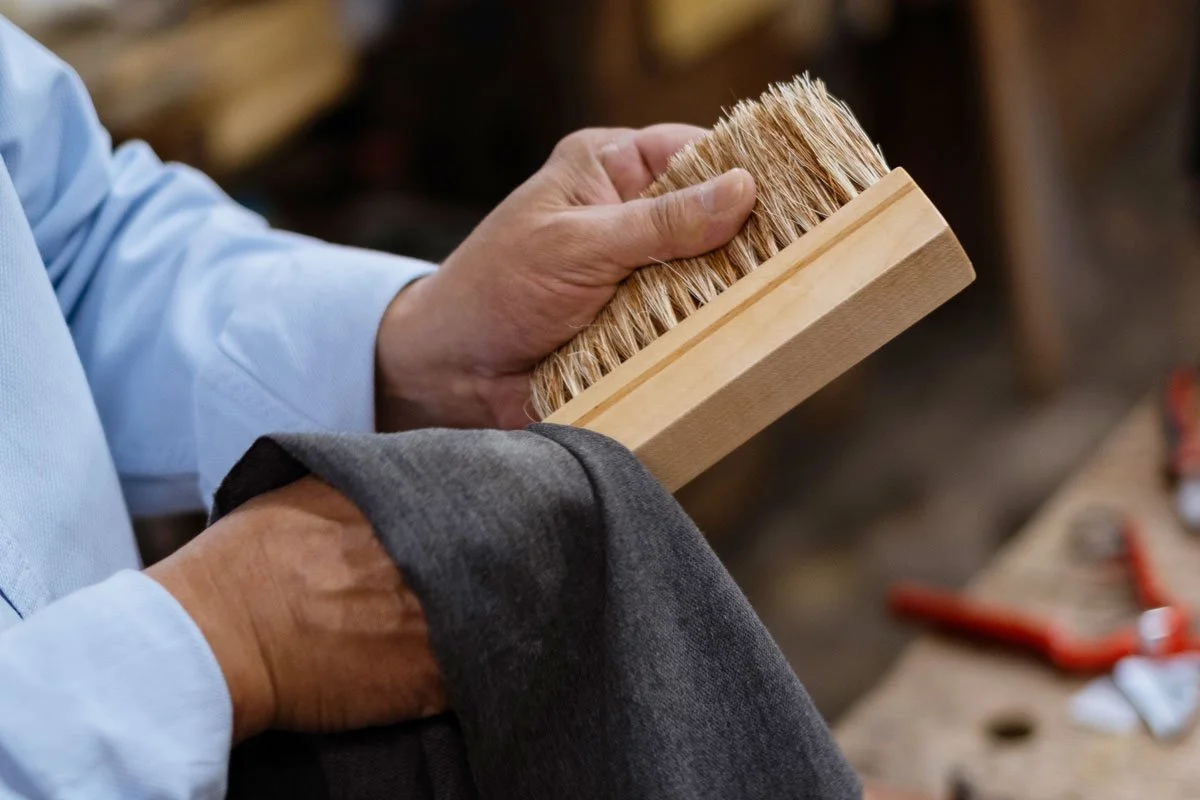
polishing the brush
— THeSE ARE IMITED EDITIONS.
Yes, limited editions… The lady came here: “It doesn’t matter what it’s for, I really like it.” It was a lady who came with a Louis Vuitton [bag], and a Louis Vuitton costs 35,000 euros. (…) But that’s not for everyone, we only go to Louis Vuitton store if we have the money to buy it. You don’t go to Louis Vuitton to buy a handbag or whatever and ask the price, they don’t even have prices. I don’t know if you’ve ever been in one of those stores, I have, out of curiosity, you see: “I like this one!”, you like it and then at the end you pay, or the seller comes along and asks for your credit card and you just swipe it. There is no price, it’s the value that the item has that matters. Just the other day I was looking… — this is just to get to what I want to tell you — I’m going to talk again about Louis Vuitton, which is the one that comes to mind now. Imagine that your grandmother had bought a dress at Louis Vuitton many years ago.
Today it's worth forty times as much.
Exactly. And not only that: you can ask to them to adapt that dress to your body. The same dress, they'll sew it again and make it for you.
— OF COURSE, BECAUSE THAT'S THE BUSINESS OF CUSTOMIZATION, BUT IT'S ALSO THE BUSINESS OF CUSTOM HIGH-END TAILORING, WITH A CONTEMPORARY FEEL, AND A LUXURY STANDARD.
Exactly. Because that's good quality, you won't throw it away… So, it continues with that level of luxury, made by them, they take it, put it on you, adapt it to you and it's "new". And yet it was your grandmother's dress, but it's a Louis Vitton. And in the end, this is what…
— THAT'S WHAT YOU TRY TO make HERE TOO, WITH THE BRUSHES.
Exactly! When we own an object that lasts for several generations, we just cherish that. “Yeah, I have things from my grandfather, that's cool! Look how long this lasted!"
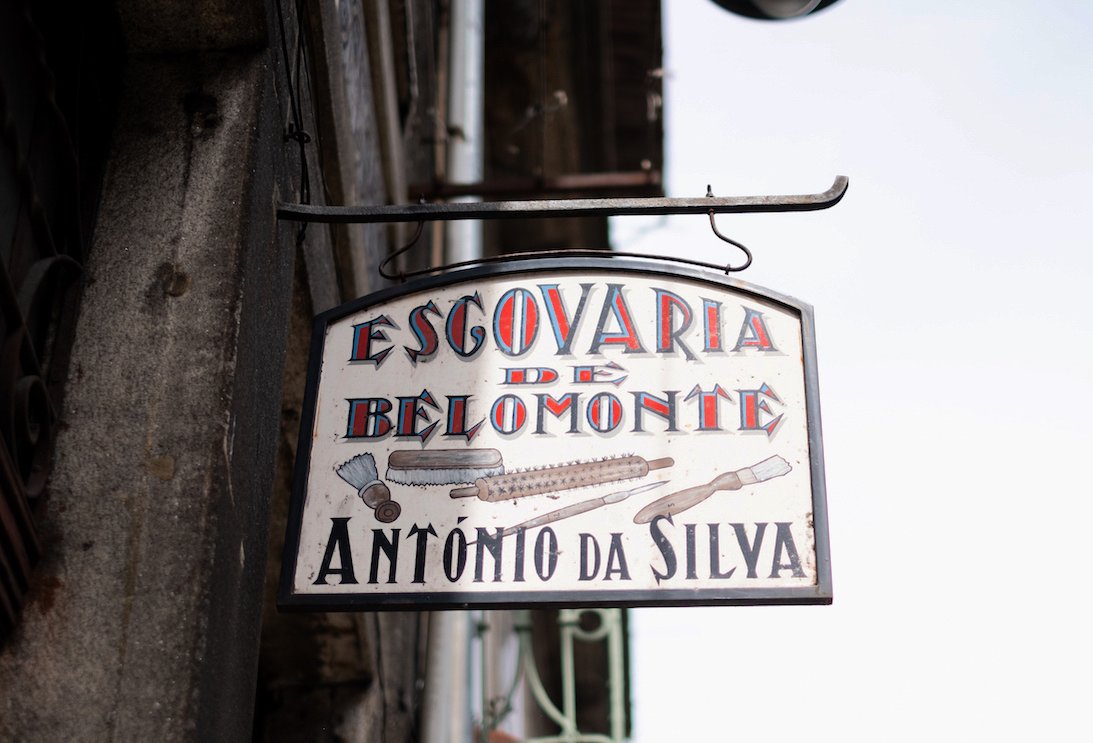
street plaque with the founder's name
— TODAY THIS IS INCREASINGLY APPRECIATED. VINTAGE IS ONCE AGAIN HIGHLY VALUED.
Exactly. Exactly. I think this will also come to an end in the future, there will come another time when things will simply continue. Now, what do we, as a business, have to do? It's placing ourselves at a point where the demand is always the same, maybe not quite the same, but just about the same. So that one day, we'll just need to sell a piece, or two, or three, and those will be enough to keep the business going for us. And that's the point where we want to get. But we actually want this, it's a condition we have, and I'm sure we'll get there. Never leaving behind the need to sell other pieces, like the occasional "duster" here and there, but we ambition to make things that leave a mark...
— AND THAT YOU CAN BUILD THE BRAND THINKING OF THE FUTURE, RIGHT?
Exactly. That's what we're trying to do. Let's see if we can get there.
— YES, IT IS A LONG-TERM PROJECT. IT CAN TAKE A LONG TIME TO BUILD.
Yes, yes, of course. It takes a long time to achieve this. Now there's Sérgio, and then it's coming, God willing… (I'm not very Catholic, but this “God willing” thing always happens…) Sérgio's son comes along… and that's what we're intended. It's funny… you see, I'm already in the third generation, Sérgio in the fourth generation, a fifth-generation… I mean, one day people will say: “These guys have to be really good to be able to be here, still working.”
… for so long, and still keeping the business alive.
Exactly. "I have brushes that my grandmother already bought there and it's cool... my grandfather, my great-grandfather, and so on." And that's what we want, it’s to leave a mark. We will see! Maybe it's dreaming high but it's dreaming that leads life.